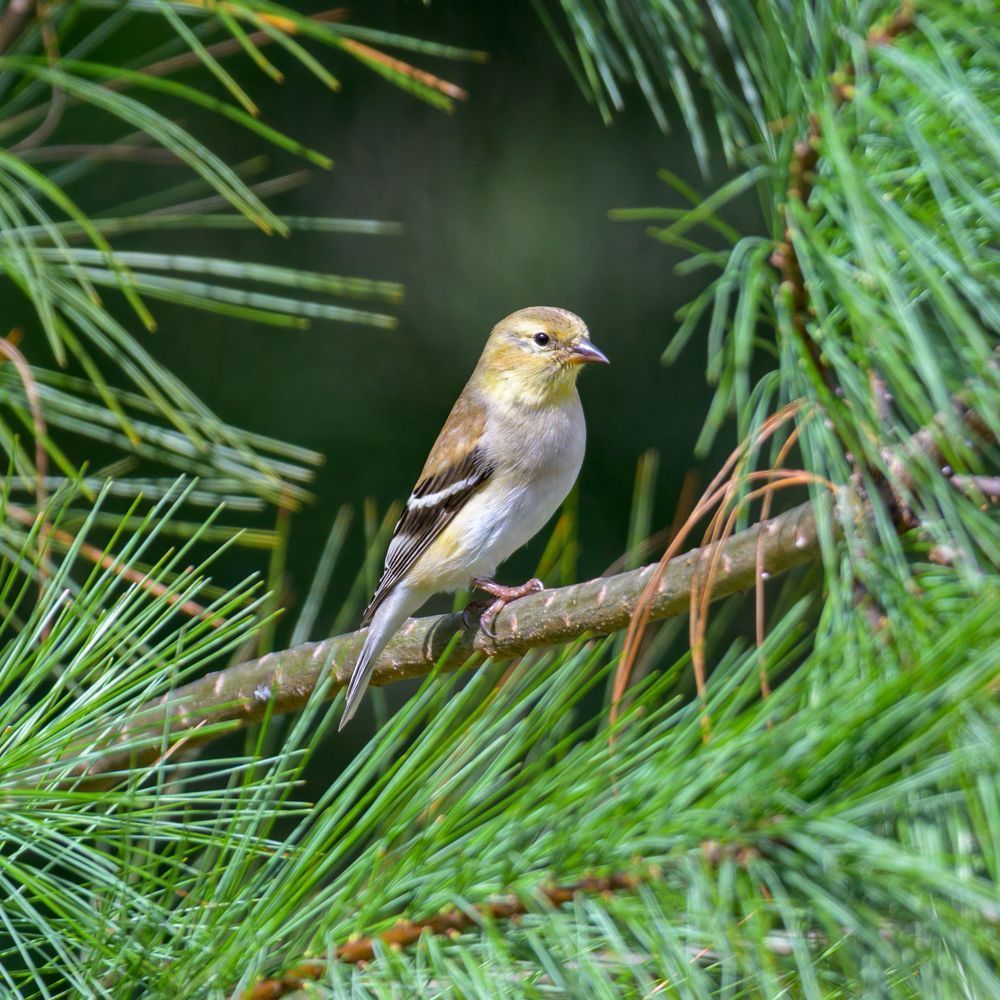
In mid‑March in the southern Appalachian Mountains, American Goldfinches are typically in transitional plumage as they move gradually from the muted tones of winter into the bright yellow breeding colors that appear later in spring. During this period the birds remain highly focused on feeding and conserving energy, often moving through coniferous trees and weedy fields where seed resources remain available. Eastern white pines provide both protective cover and vantage points while goldfinches forage nearby for seeds from grasses, weeds, and other plants. This moment captures a quiet pause within that routine movement pattern, the bird perched calmly among pine needles while maintaining awareness of its surroundings during the seasonal shift toward spring.
This print is also available in a RECTANGULAR format
Identification
Small finch with a short conical bill, slender body, and pointed wings. Early spring individuals often show a mix of dull yellow, olive, and gray tones before the bright breeding plumage fully develops.
Habitat
Open woodland edges, fields, gardens, and residential landscapes with abundant seed‑producing plants and scattered trees for perching.
Geographic Range
Widely distributed across North America, breeding through much of the United States and southern Canada and wintering across most of the United States and northern Mexico.
Interesting Behavior or Note
American Goldfinches are unusual among North American songbirds in delaying their breeding season until mid‑ to late summer, timing nesting with peak seed availability.
For the Technically Inclined
Camera: Nikon Z9 | Lens: NIKKOR 600mm f/4E FL + TC‑14E III | Focal Length: 850 mm | Shutter Speed: 1/1600 | Aperture: f/5.6 | ISO: 900 | Support: Gitzo Series 5 tripod
Location: Franklin, North Carolina
Elevation: ~670 m (2,200 ft)
Date: 2026‑03‑15