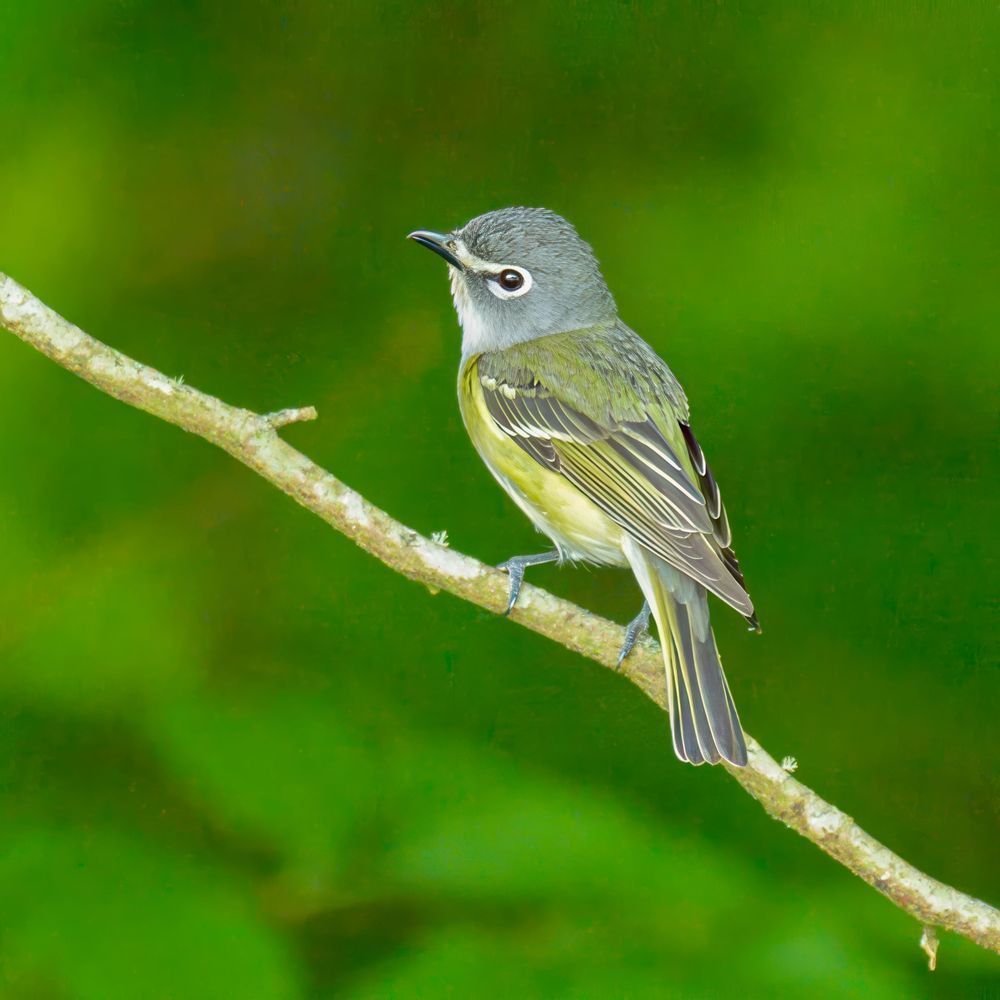
By early June, Blue-headed Vireos in the southern Appalachians are on their breeding grounds, occupying mature montane forest where a closed canopy and developed understory support nesting and insect foraging. The species feeds primarily on insects and larvae, gleaning prey deliberately from leaves and small branches through the middle and upper forest layers. Along the Blue Ridge Parkway, steep mountain slopes can bring those canopy layers nearly level with overlooks, creating unusual opportunities to observe a bird that often remains well above eye level. Appalachian Blue-headed Vireos represent the southern extension of the species’ eastern breeding range, making intact mountain forest especially important locally. Their dependence on mature, structurally complex woodland also links their breeding success to the continuity and condition of these high-elevation forest habitats.
For the Technically Inclined
Camera: Nikon Z9 | Lens: NIKKOR Z 400mm f/2.8 TC | Focal Length: 560 mm | Shutter Speed: 1/2000 | Aperture: f/4.0 | ISO: 9000 | Support: Harness with Monopod | Location: Blue Ridge Parkway near Licklog Ridge Overlook, North Carolina | Elevation: 4,600’ | Date: 2024-06-04