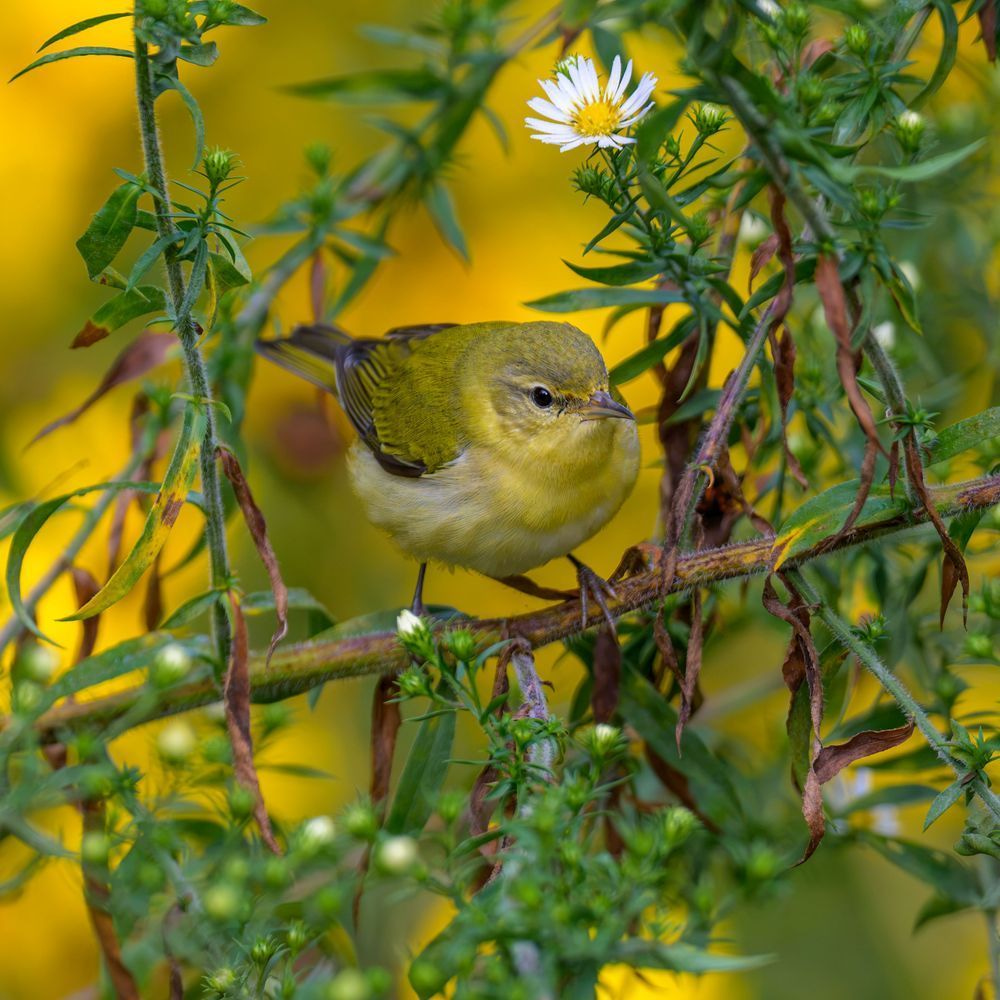
Late September marks a transitional period for the Tennessee Warbler as it travels south from Canada’s boreal forests toward wintering areas in Central America and northern South America.
During migration, the species uses a broad range of wooded and vegetated habitats while searching foliage for food, with fruit supplementing its insect-centered diet as seasonal resources change. Meadows bordered by woody vegetation can contribute to the larger mosaic of cover and foliage-rich habitat available along the route. Set among the late-season vegetation of a Franklin meadow, this image connects an intimate encounter with the much larger annual migration linking northern breeding forests and tropical wintering landscapes.
For the Technically Inclined
Camera: Nikon Z9 | Lens: NIKKOR 600mm f/4E FL ED VR + Nikon TC-14E III | Focal Length: 840 mm | Shutter Speed: 1/1600 | Aperture: f/5.6 | ISO: 1250 | Support: Gitzo Series tripod
Location: Franklin, North Carolina — meadow on property
Elevation: 2,300'
Date: 2026-09-26