

Blue-headed Vireo in Western North Carolina: Field Notes from the Blue Ridge Parkway
Jul 06, 2026
 A Familiar Song, Finally a Photograph
The Blue-headed Vireo had been a familiar voice in the forests of Western North Carolina for several years. Its song is distinctive once learned—clear, deliberate, and measured, often carrying through mixed hardwood forests during spring and summer.
Despite hearing them repeatedly, seeing one can be surprisingly difficult.
Blue-headed Vireos often remain high in the canopy, moving methodically among leaves and branches while foraging. Their behavior makes them far easier to hear than photograph.
This encounter was different.
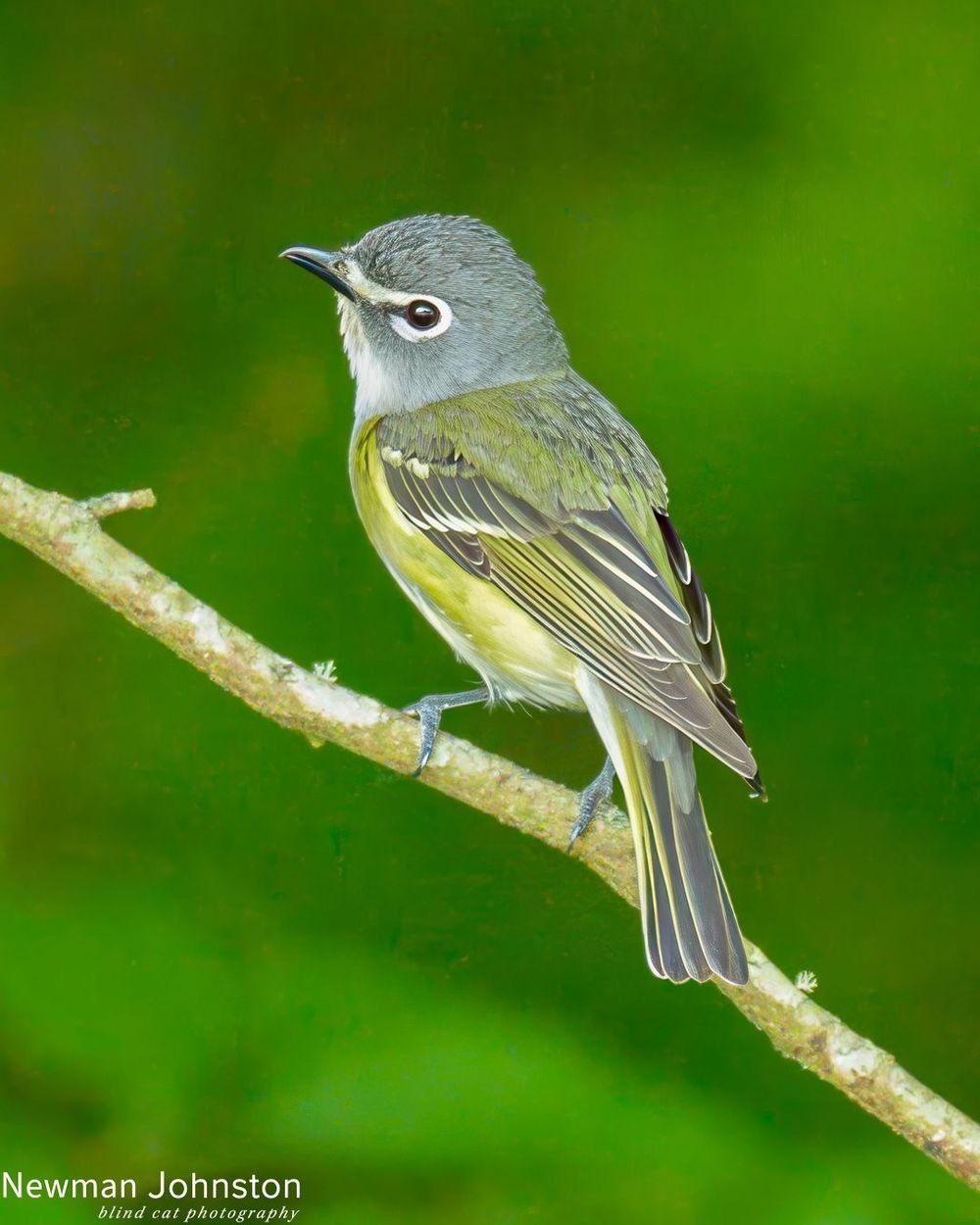
On June 4, 2024,, while birding along the Blue Ridge Parkway, I finally had an opportunity to photograph one clearly. The bird was still working high in the canopy, but the Parkway’s steep mountain terrain created a unique advantage. In many places, the dramatic drop-offs place observers nearly at eye level with the treetops, making canopy species far more accessible for observation and photography.
That elevation advantage made this encounter possible.
Identifying a Blue-headed Vireo
The Blue-headed Vireo is one of the most striking vireos in the eastern United States.
Its bold facial pattern is often the first feature birders notice. A bluish-gray head contrasts sharply with bright white spectacles and a clean white throat. Olive-green upperparts blend into pale yellow-green flanks and a lighter belly.
The eyes are dark and prominent, emphasized by the bright eye ring.
Compared to other vireos, the Blue-headed Vireo often appears cleaner and more sharply marked. Its deliberate movements and careful foraging behavior also help separate it from faster-moving warblers that share similar habitats.
Though vireos are sometimes overlooked because of their subtle behavior, the Blue-headed Vireo is a remarkably elegant bird when viewed well.
Habitat and Range in Western North Carolina
In Western North Carolina, Blue-headed Vireos are closely associated with mature mixed forests, especially higher-elevation habitats containing both deciduous and coniferous trees.
The Blue Ridge Parkway provides excellent habitat.
These birds are most commonly encountered during the breeding season, when males sing frequently to establish territory and maintain pair bonds. They tend to favor wooded slopes, forest edges, and dense canopy zones where insect activity is high.
Across their broader range, Blue-headed Vireos breed through northeastern forests and higher elevations of the Appalachian region. During winter, most migrate south into the southeastern United States, Mexico, Central America, and parts of the Caribbean.
Western North Carolina represents an important part of their breeding range in the southern Appalachians.
Feeding Behavior and Ecological Role
Blue-headed Vireos are highly methodical foragers.
Rather than making rapid, darting movements like many warblers, they move deliberately through branches, carefully inspecting leaves, twigs, and bark for insects and spiders.
Their diet consists primarily of:
- caterpillars
- beetles
- spiders
- other small arthropods
During migration and winter, berries and other fruits may become more important.
This feeding strategy makes them valuable insect predators within forest ecosystems. By helping regulate insect populations, Blue-headed Vireos contribute to overall forest health and ecological balance.
Their slow, deliberate foraging style is often one of the best clues to identification in the field.
Why This Encounter Stood Out
Some photographs matter because of technical quality. Others matter because of the experience behind them.
This image of a Blue-headed Vireo stands out for the latter.
After years of hearing this species in Western North Carolina, finally seeing and photographing one clearly felt especially rewarding. The encounter also reinforced how unique the Blue Ridge Parkway can be for bird photography.
The Parkway’s elevation and terrain create unusual viewing angles that can bring canopy species into far better view than is normally possible from the forest floor.
For birders and photographers alike, those moments are always memorable—when a familiar song finally becomes a clear image and a long-awaited species moves from heard to seen.