
Yanacocha Reserve Birding Ecuador: Field Notes from a High-Elevation Andean Cloud Forest
Jan 31, 2026
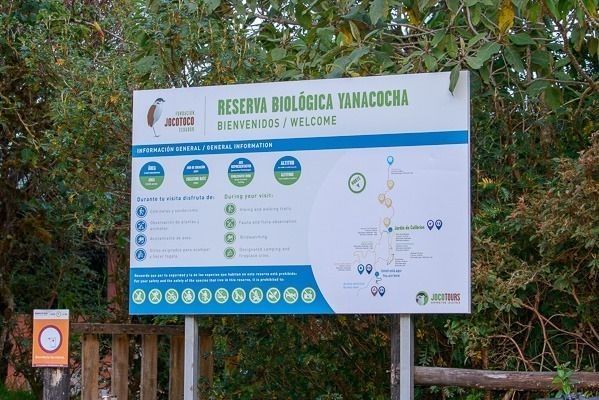 Arrival at Yanacocha Reserve
On September 27, 2021, my wife and I were picked up in Quito by our guide, Andres Vasquez, and his driver from Tropical Birding Tours. This marked the beginning of a three-day birding and photography trip based out of Tandayapa Bird Lodge in Ecuador’s western Andes.
Our first destination was Yanacocha Reserve.
We arrived at approximately 7:30 in the morning. Temperatures were in the low 40s Fahrenheit, and the cold mountain air immediately felt noticeably different from Quito below. The morning was clear and calm, with excellent visibility across the reserve. The high elevation and thin air reinforced that we were entering a very different ecosystem from the city we had left behind.
Even before stepping onto the trails, it was clear this was a place shaped by altitude.
A Unique Andean Ecosystem
Yanacocha Reserve protects a critical transition zone between upper montane cloud forest and paramo habitat. At elevations between roughly 11,200 and 12,800 feet, only highly specialized plants and animals thrive.
The forest is dense with mosses, lichens, and epiphytes, creating a landscape that feels ancient and highly adapted to persistent cool temperatures and moisture. At higher elevations, vegetation transitions into shrubs and hardy grasses capable of surviving harsh mountain conditions.
This elevational transition supports bird species rarely encountered outside the high Andes.
For birders and photographers, Yanacocha offers one of the most accessible opportunities to observe specialized high-elevation species in Ecuador.
Bird Activity in the Morning Cold
Bird activity during our visit centered around the early morning feeding window. Despite the cold temperatures, hummingbird activity was strong, particularly around managed feeding stations where birds could reliably access nectar.
This environment supports several remarkable high-elevation hummingbird species, each adapted to thin air and cold conditions. Their ability to hover and maneuver at these elevations is remarkable and speaks to the extraordinary adaptations required for survival in the Andes.
Activity beyond the feeding areas came in waves. There were periods of steady movement followed by quieter stretches where patience became essential.
Birding at Yanacocha quickly became an exercise in observation - watching carefully, listening for movement, and remaining ready for brief windows of activity.
The Photography Challenge
From a photography standpoint, Yanacocha presented a unique set of challenges.
The early morning light was soft and beautifully diffused, but conditions remained relatively dim due to the reserve’s elevation and dense cloud forest habitat. Higher ISO settings became necessary almost immediately, especially when photographing active birds moving quickly between perches and feeding stations.
As with many birding locations, success depended on patience and preparation. The most rewarding moments often came suddenly, requiring quick reaction and careful focus.
Capturing birds in this environment required a combination of technical readiness and sustained observation.
Why Yanacocha Matters
Yanacocha is more than a birding destination. It is an important protected ecosystem preserving fragile high-elevation habitats near Quito.
Places like this provide a rare opportunity to observe species adapted to environmental conditions that feel challenging even to human visitors. Cold temperatures, high elevation, and thin mountain air create demanding conditions, yet life here has evolved to thrive.
Birding at Yanacocha was an unforgettable introduction to Ecuador’s high Andes.
For me, it remains one of the most memorable locations of our Ecuador journey - not only because of the birds, but because of the environment itself. Yanacocha offered a powerful reminder that habitat and species are inseparable, and that some of the most rewarding wildlife experiences happen in places shaped by elevation, climate, and ecological specialization.