

Carolina Chickadee Feeding Hierarchy: Social Dynamics at a Backyard Feeder in Western North Carolina
Jul 02, 2026
Carolina Chickadee Feeding Hierarchy at a Backyard Feeder
The Carolina Chickadee is one of the most familiar year-round residents of the southeastern United States. Small, energetic, and highly social, these birds operate within an organized social structure that influences how they forage and interact.
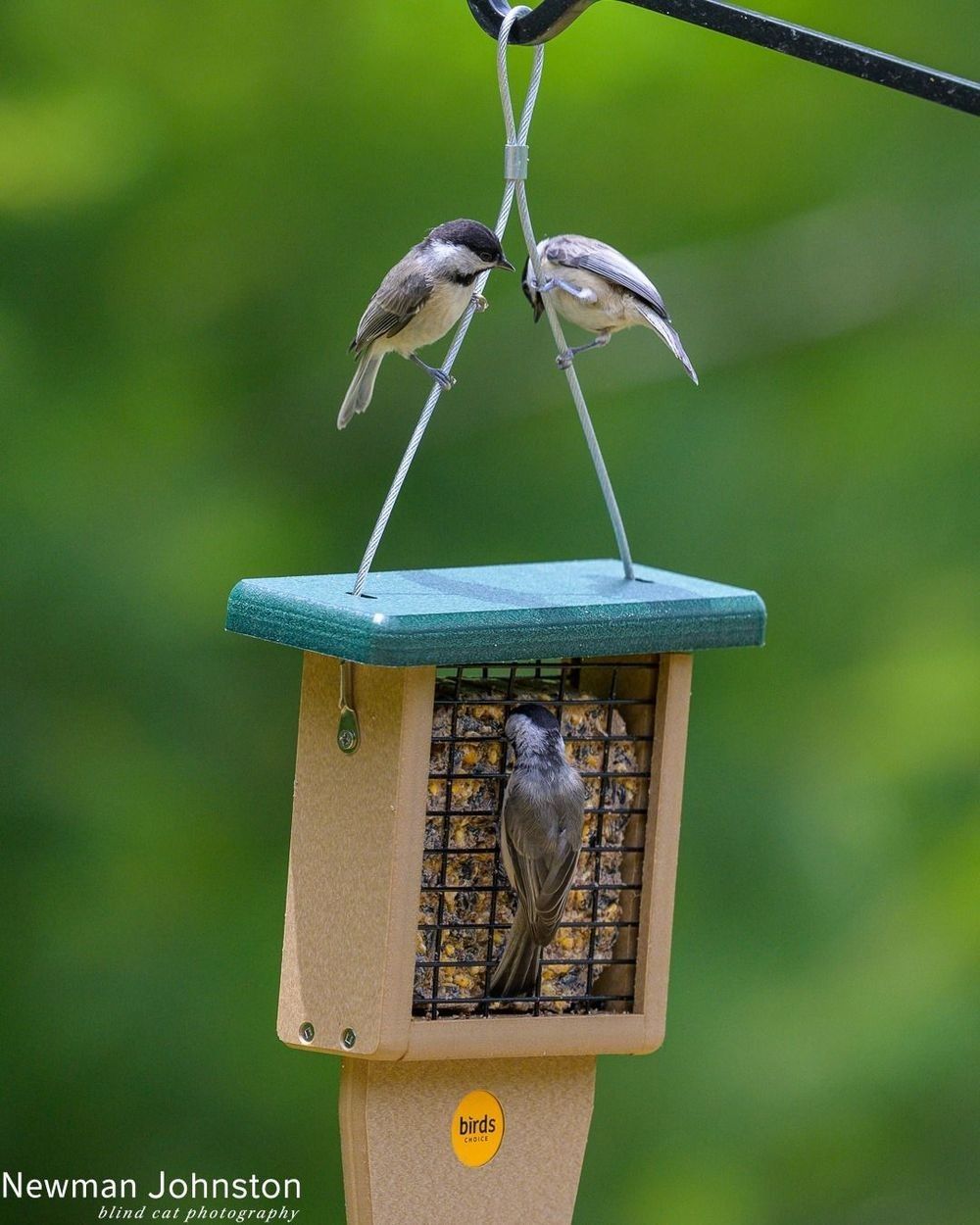
The three Carolina Chickadees photographed at a backyard feeder in Western North Carolina offered a compelling look at this feeding hierarchy. Over the course of several weeks, the same birds were repeatedly observed foraging together and perching near one another.
These repeated interactions suggest a stable local group with established social relationships. Like many flocking birds, chickadees often maintain familiar associations outside the breeding season, allowing them to navigate feeding opportunities with less conflict.
Feeding Hierarchy and Social Rank
At first glance, a feeder stocked with a high-energy seed cake may seem abundant enough to eliminate competition. In reality, concentrated food sources often increase social interactions rather than reduce them.
When multiple birds converge on a small feeding area, access to food becomes shaped by timing, position, and social rank.
In the first image, one chickadee feeds while two others wait nearby. This behavior reflects a common strategy among flocking birds. Waiting individuals often watch feeding opportunities carefully, assessing when to move in while minimizing unnecessary conflict.
This subtle negotiation helps maintain order around the feeder.
Aerial Interactions Around the Feeder
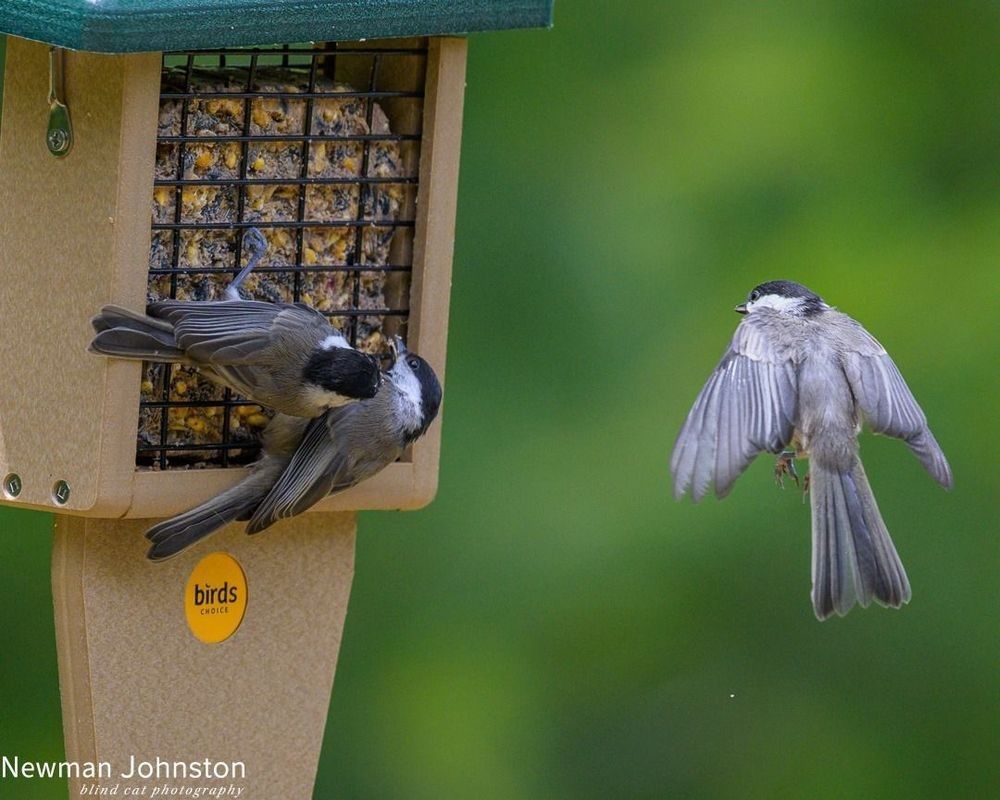
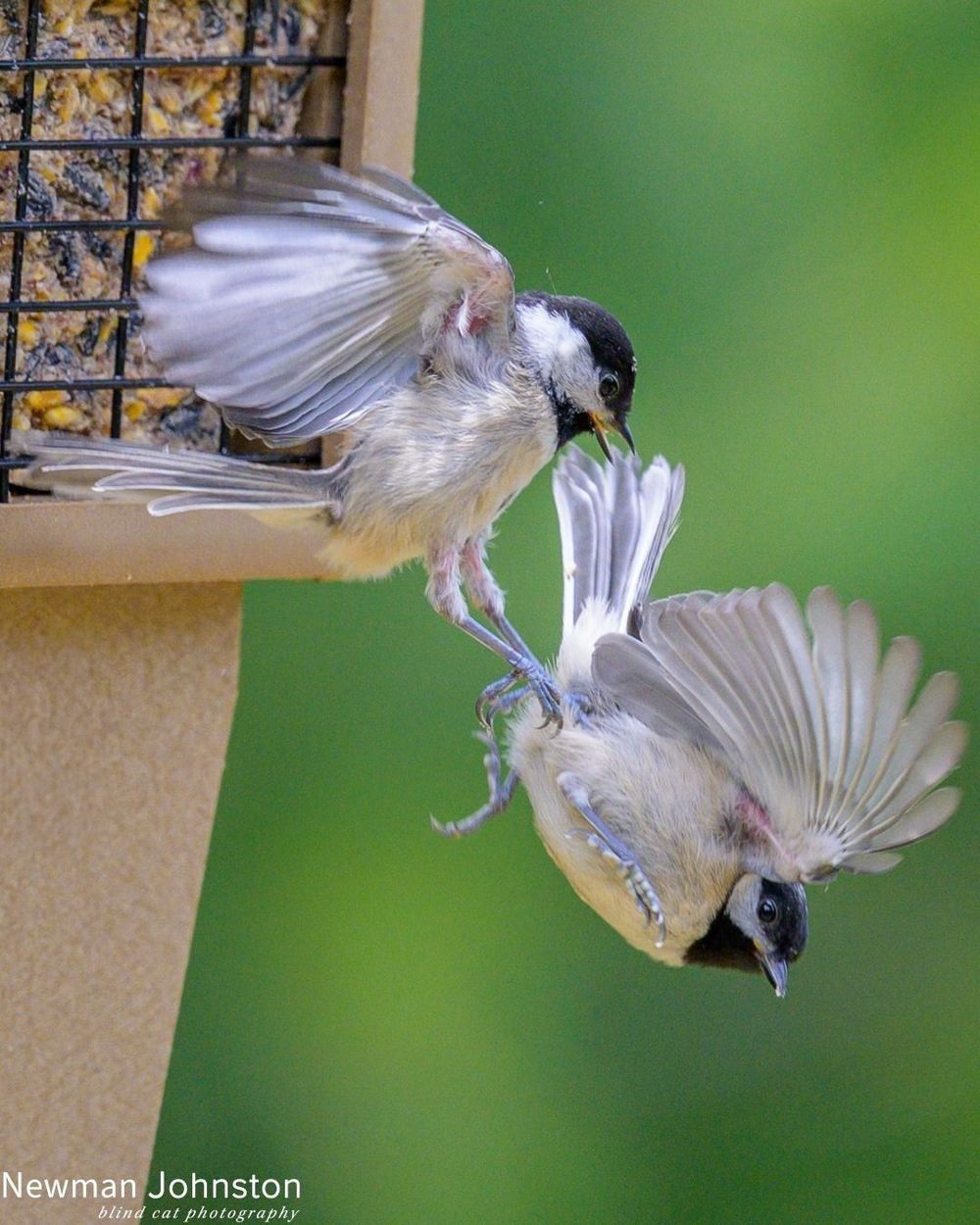
The second and third images capture a more dynamic moment.
As one chickadee approaches and another departs, a brief aerial interaction unfolds near the feeder. These exchanges are common and usually short-lived.
They are rarely serious fights.
Instead, these quick encounters serve as signals that establish spacing and feeding priority. A dominant bird may claim immediate access, while another yields and waits for a better opportunity.
Though these interactions often last only a fraction of a second, they play an important role in maintaining social structure within the flock.
Why Social Structure Matters
For Carolina Chickadees, social rank can directly influence survival.
Dominant birds often gain first access to food and may secure better foraging opportunities. Subordinate birds compensate by remaining flexible, feeding during quieter moments or moving in when dominant birds leave.
Over time, these adjustments allow multiple birds to share limited resources without constant aggression.
The repeated observations made over the past month suggest these three chickadees are familiar with one another’s behavior. That familiarity likely reduces prolonged conflict because each bird already understands its relative position in the hierarchy.
What may appear to be chaotic movement around a feeder is often a surprisingly efficient social system shaped by repeated daily interactions.
What Backyard Feeders Can Teach Us
Backyard feeders provide far more than supplemental food.
They offer a valuable window into bird behavior, social structure, and survival strategies. Carolina Chickadees are especially rewarding to observe because their interactions often reveal complex social relationships hidden beneath their fast-paced movements.
Each approach, pause, and brief aerial exchange contributes to a larger story about cooperation, competition, and adaptation.
For those willing to watch closely, a simple feeder can become a front-row seat to the hidden social lives of one of North Carolina’s most engaging backyard birds.