

Macro Photography Focus Stacking: Capturing Black-Eyed Susan Detail with the Nikon Z9
Jun 28, 2026
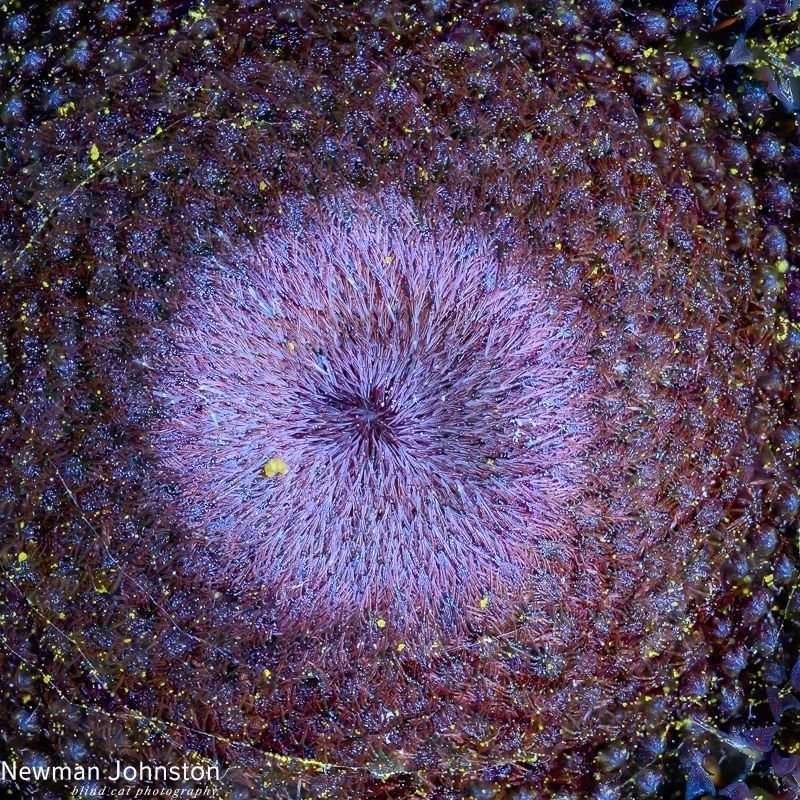 Looking Beyond What the Eye Normally Sees
Black-eyed Susans are common summer flowers here in Franklin, North Carolina, easily recognized by their bright yellow petals and dark central disk. Under magnification, the center of the flower reveals remarkable complexity—tiny structures, textures, and patterns that are difficult to appreciate without macro photography.
The Challenge of Macro Photography
One of the biggest challenges in macro photography is depth of field. As magnification increases, the area that appears sharp becomes extremely thin. I wanted to capture sharp detail from the petals through the center of the flower.
Using Focus Shift with the Nikon Z9
This image was created using the Nikon Z9’s built-in focus shifting feature. Instead of taking one photograph, the camera captures a sequence of images while gradually shifting the focus point between each frame. For this flower, I used an aggressive sequence of 87 images.
Why Focus Stacking Matters
Without stacking, only small sections of the flower would appear sharp. With stacking, the final image reveals detail across the entire subject.
A Beginner-Friendly Approach
For anyone new to macro photography, focus stacking can sound complicated, but modern DSLR and mirrorless cameras make the process much easier. Many newer cameras now include built-in focus shifting, allowing the camera to automatically capture a sequence of images at slightly different focus points.