

Tufted Titmouse Foraging Behavior: What These Backyard Birds Eat in North Carolina Trees
Jun 19, 2026
Tufted Titmouse Foraging Behavior in Franklin, North Carolina
Early morning in the canopy often reveals a side of the Tufted Titmouse that many backyard birders rarely see. Away from feeders, these energetic birds become highly active insect hunters, moving branch to branch with remarkable agility as they search for food hidden in bark, leaves, and lichen-covered limbs.
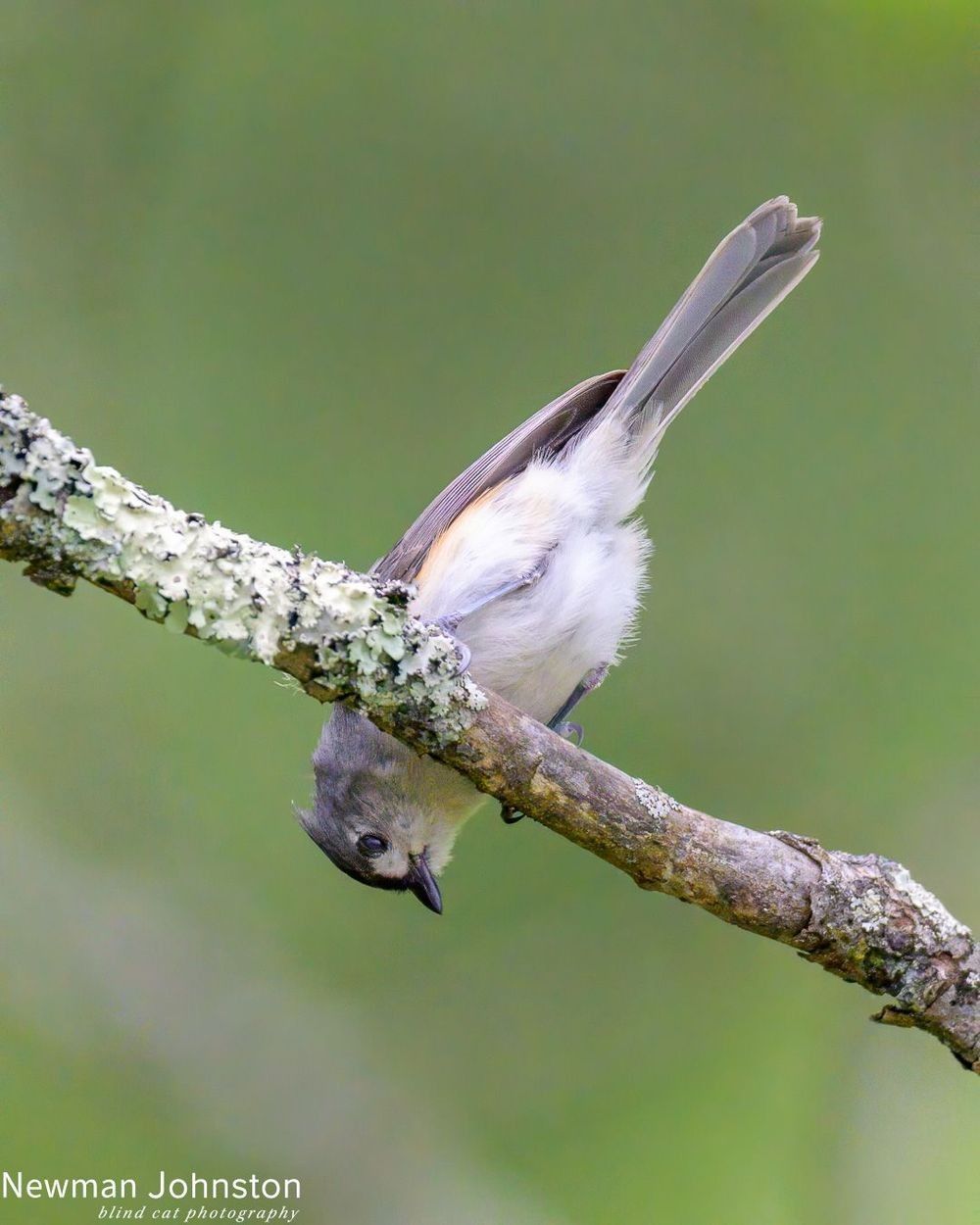
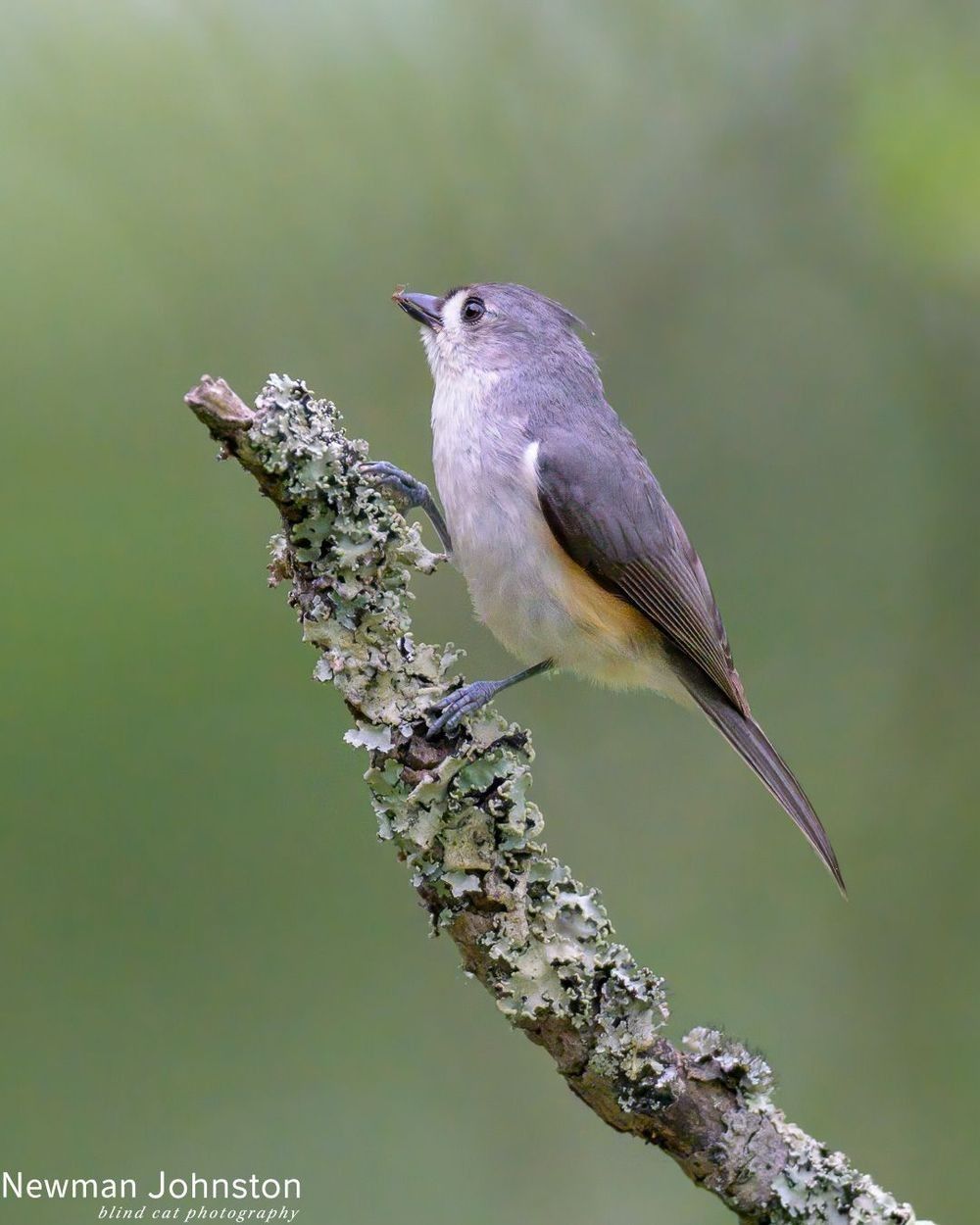
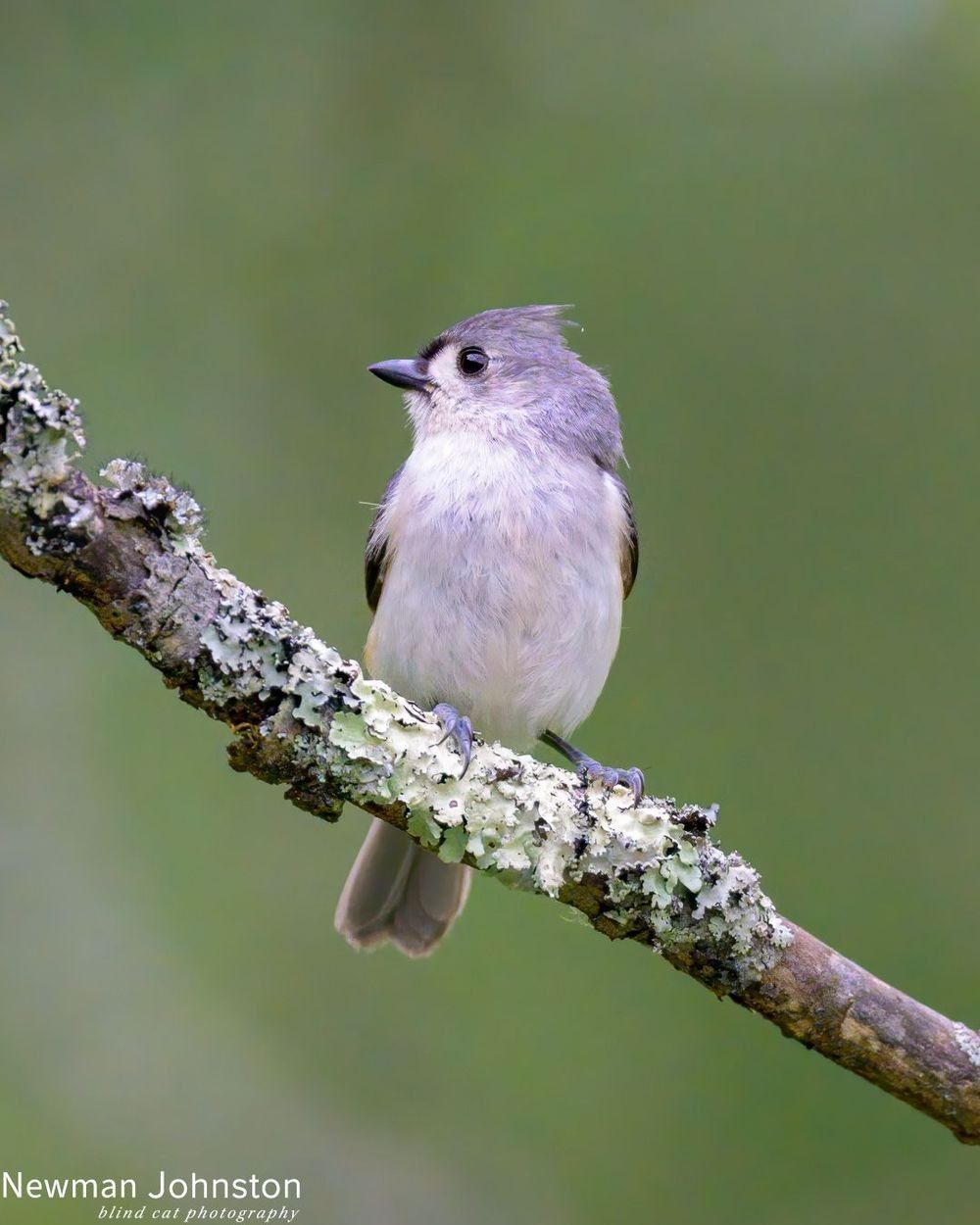
These images, taken in Franklin, North Carolina on April 25, capture several moments in the foraging behavior of a single Tufted Titmouse. The bird moved steadily through the canopy, pausing only briefly before shifting to the next branch or cluster of foliage.
Its movements appeared deliberate and efficient, suggesting a well-developed search pattern rather than random exploration.
What Do Tufted Titmice Eat?
The diet of a Tufted Titmouse changes throughout the year. During spring and summer, insects become especially important. Caterpillars, beetles, spiders, larvae, and other small invertebrates provide essential protein, particularly during nesting season when adults are feeding growing young.
In autumn and winter, titmice shift more heavily toward seeds, nuts, and berries. At backyard feeders, they readily take sunflower seeds, peanuts, and suet. Even then, they continue supplementing their diet with insects whenever available.
The prey item visible in one of these images is a reminder that insects remain a critical food source in spring. This seasonal shift toward protein-rich prey supports breeding activity and helps sustain the high energy demands of active foraging birds.
Adapted for Life in the Canopy
One of the most impressive traits of the Tufted Titmouse is its agility. These birds are exceptionally well adapted for searching complex tree surfaces for food. Strong feet allow this species to grip branches securely, even while hanging upside down.
The upside-down posture seen in one image is classic titmouse behavior. By moving beneath branches, they gain access to insects and larvae hidden in places that may be difficult for less agile birds to reach. This behavior greatly expands the number of feeding opportunities available in the forest canopy.
Sharp eyesight also plays a major role. Titmice constantly scan bark crevices, leaf clusters, and moss-covered surfaces for movement or signs of prey.
Small Bird, Constant Motion
The Tufted Titmouse rarely stays still for long. Nearly every moment in the canopy involves movement, scanning, or feeding. That constant activity reflects the high metabolic demands of a small songbird that must gather food efficiently throughout the day.
What may look like restless behavior is actually a highly refined survival strategy. Each quick movement, brief pause, and upside-down inspection increases the chance of finding hidden prey.
For patient observers, watching a Tufted Titmouse forage offers a remarkable look into the daily life of one of North Carolina’s most engaging woodland birds. Whether visiting a feeder or searching tree branches high above, these birds reveal an impressive blend of intelligence, agility, and adaptability.