

Chestnut-sided Warbler: Breeding Season on the Blue Ridge Parkway
Jul 10, 2026
 Arrival at the Roy Taylor Forest Overlook
On July 6, 2026, I stopped along the Blue Ridge Parkway near the Roy Taylor Forest Overlook. Like many overlooks in the Blue Ridge Mountains, the steep terrain creates an unusual advantage for bird photography.
Instead of looking upward into the treetops, the mountainside drops away below the road, placing observers nearly level with the upper canopy. Species that normally remain high above the forest floor suddenly become much easier to observe.
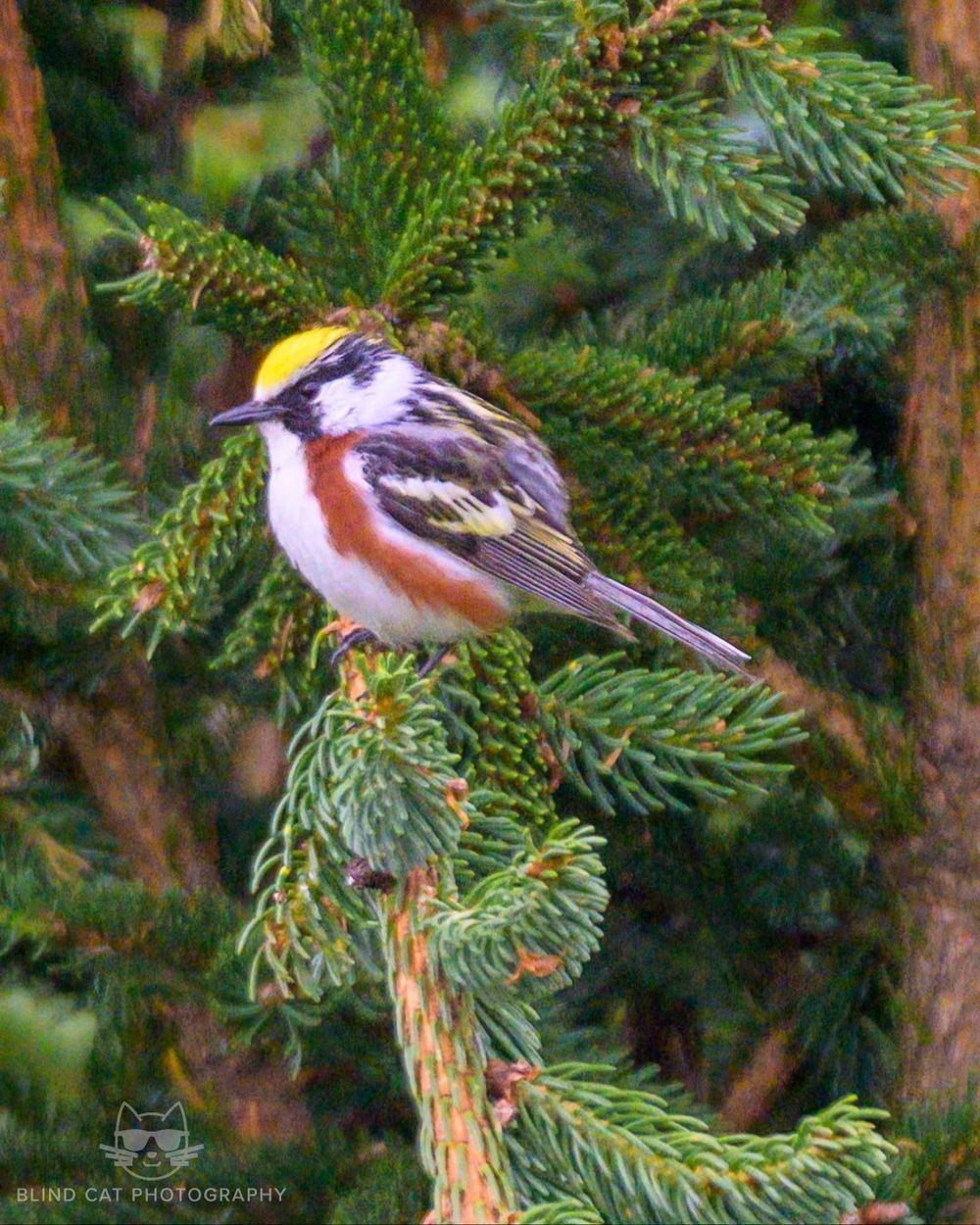
That was exactly the situation with this Chestnut-sided Warbler.
Perched among the branches of a spruce near the overlook, the bird remained visible long enough for several photographs before continuing its search for insects through the surrounding canopy.
Identifying the Chestnut-sided Warbler
During the breeding season, few eastern warblers are as distinctive.
Adult males display a bright yellow crown, white underparts, bold black facial markings, olive-green upperparts, and the rich chestnut streaks along the sides that give the species its name.
Females and immature birds appear considerably duller, but the yellow crown and facial pattern usually remain helpful identification features.
Like many warblers, Chestnut-sided Warblers are constantly moving, making careful observation essential before they disappear into the foliage.
Habitat and Breeding Range
Chestnut-sided Warblers breed across much of the northeastern United States and southern Canada. In North Carolina, however, they are primarily restricted to the cooler, higher elevations of the Blue Ridge Mountains.
Western North Carolina represents the southern edge of their breeding range.
Here they favor regenerating forests, shrubby openings, forest edges, and young second-growth woodlands where dense vegetation provides both nesting cover and abundant insect prey.
Unlike many colorful warblers that begin to sing less frequently once nesting is underway, Chestnut-sided Warblers often continue singing well into July, making them easier to locate during the height of the breeding season in the southern Appalachians. Their persistent song is often the first clue that one is foraging high in the canopy.
Unlike many birds that nest high in trees, Chestnut-sided Warblers often build their nests surprisingly low in shrubs or saplings, usually only a few feet above the ground
Feeding Behavior and Ecological Role
Like most wood-warblers, the Chestnut-sided Warbler feeds almost entirely on insects during the breeding season.
Caterpillars, spiders, beetles, flies, and other small arthropods make up most of its diet. The bird moves deliberately through leaves and small branches, inspecting vegetation before making short, precise movements to capture prey.
This constant foraging helps regulate insect populations during the summer breeding season while providing the high-protein diet needed to raise young successfully.
As autumn approaches, small berries become a more important food source before migration begins.
Why This Encounter Stood Out
For me, this photograph represents one of the unique advantages of birding the Blue Ridge Parkway.
The Parkway's dramatic terrain creates opportunities that simply don't exist in flatter landscapes. Being able to photograph canopy species nearly at eye level provides a perspective that is rarely possible elsewhere.
The Chestnut-sided Warbler is a bird that many visitors hear before they ever see. Catching one in good light, displaying its brilliant breeding plumage against the evergreen branches of the southern Appalachians, was a reminder of why midsummer remains one of my favorite times to explore the Blue Ridge Parkway.