

Ruby-throated Hummingbird: Summer in the Mountains of Western North Carolina
Jul 26, 2026
A Summer Hummingbird in Western North Carolina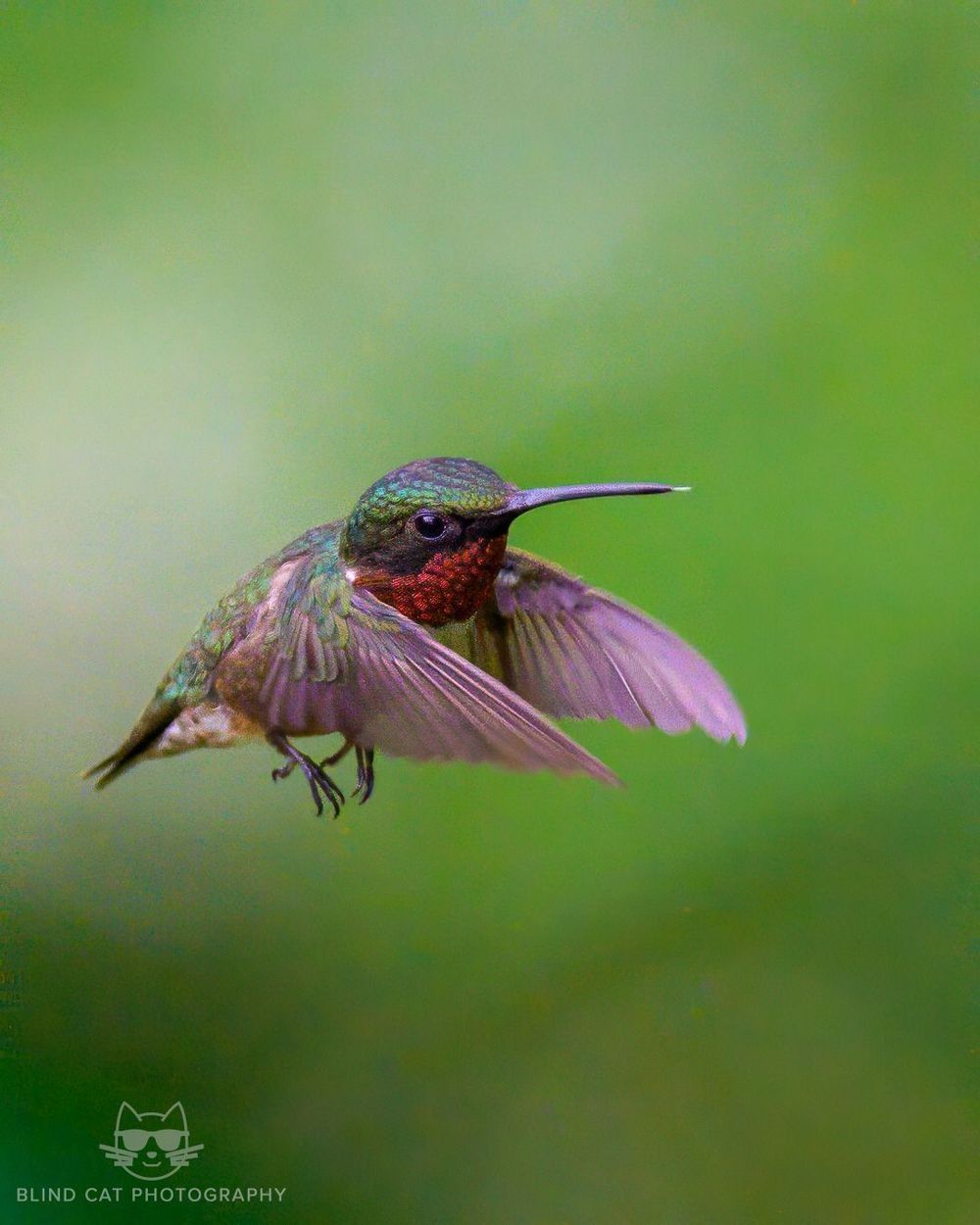
On July 25, 2026, I photographed this male Ruby-throated Hummingbird along the edge of a wooded area and wildflower meadow in Franklin, North Carolina.
The setting is characteristic of the species. Ruby-throated Hummingbirds use forest edges, open woodlands, meadows, stream borders, gardens, and similar habitats where trees provide cover and nesting sites while nearby flowering plants provide nectar.
The male's namesake ruby-red throat, or gorget, can change dramatically with the light. Depending on the angle, those specialized feathers may appear brilliant red, dark crimson, or nearly black. In this photograph, the bird's position and light reveal much of that iridescent color while it hovers against the surrounding summer vegetation.
The Only Breeding Hummingbird in the East
The Ruby-throated Hummingbird is the only hummingbird species that regularly breeds throughout Eastern North America, giving it a particularly important place in the summer birdlife of Western North Carolina.
Females construct tiny nests on tree branches and raise the young without assistance from the males. By July, the breeding season is well underway, but the hummingbird population we see around Western North Carolina is beginning to change.
Adult males can start their southward migration as early as August. Females and young birds generally follow later, while migrants arriving from farther north can continue moving through the region into fall.
A Remarkable Migration
For a bird weighing only a few grams, the Ruby-throated Hummingbird undertakes an extraordinary migration.
Most spend the winter in Mexico and Central America. During migration, some cross the Gulf of Mexico directly, while others travel around the Gulf Coast. The direct route can involve a nonstop flight of roughly 500 miles or more over open water.
In spring, returning birds move north into their breeding range. By early fall, the cycle reverses as hummingbirds leave Western North Carolina and head toward their wintering grounds.
That means the birds moving through our yards and meadows late in the season may include both local birds and migrants passing south from breeding areas farther north.
Native Flowers and Natural Food Sources
Ruby-throated Hummingbirds are closely associated with flowering plants. Their long bills and extendable tongues allow them to reach nectar deep within flowers, while hovering gives them access to blooms that offer few places to perch.
In North Carolina, native plants that provide nectar include cardinal flower, bee balm, coral honeysuckle, trumpet creeper, and jewelweed.
A landscape containing native flowers that bloom at different times can provide natural nectar sources throughout much of the hummingbird season. Early blooming plants can help returning spring migrants, while summer and late-season flowers provide resources during breeding and preparation for fall migration. Audubon North Carolina specifically notes the value of native flowers such as columbine for returning Ruby-throated Hummingbirds.
Nectar, however, is only part of their diet. Ruby-throated Hummingbirds also capture small insects and spiders, providing protein that nectar alone cannot supply.
More Than a Flash of Red and Green
Ruby-throated Hummingbirds are easy to appreciate simply for their speed, iridescent plumage, and remarkable flight. Watching them through an entire summer reveals something more—their connection to the seasonal ecology of Western North Carolina.
Woodland edges provide nesting habitat and cover. Meadows and native flowers provide nectar. Insects provide protein. And as summer progresses, those same food resources help prepare hummingbirds for a migration that will carry many of them hundreds or thousands of miles south.
Photographing this male in late July captured one brief moment in that annual cycle. Soon the hummingbirds that define our summer landscape will begin disappearing southward, only to return again the following spring.