

White-breasted Nuthatch: Headfirst Through the Forest Canopy
Jul 29, 2026
A Year-Round Resident of Western North Carolina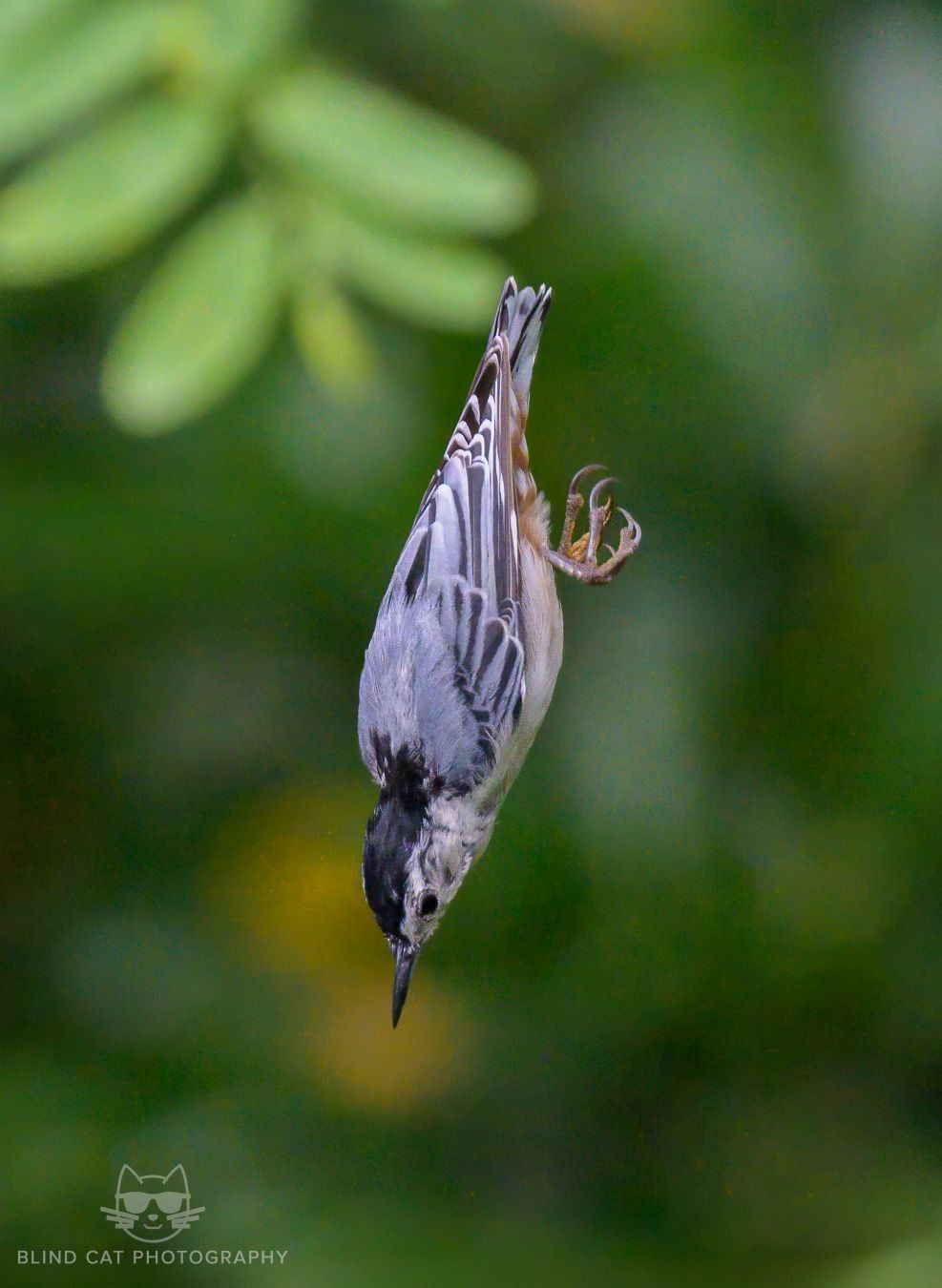
White-breasted Nuthatches occupy wooded areas across much of North America, including the forests of Western North Carolina throughout the year. They are especially associated with mature deciduous and mixed forests containing large trees, although they also use woodland edges, parks, and wooded residential areas.
Unlike migratory species that appear in the mountains only during certain seasons, White-breasted Nuthatches can be encountered throughout the year. Their dependence on mature trees reflects the resources those trees provide: nesting cavities, insects hidden in bark, and seeds and nuts that become particularly important outside the breeding season.
Their distinctive nasal calls may reveal their presence before the birds themselves come into view.
Why Nuthatches Move Headfirst Down Trees
Perhaps the most recognizable White-breasted Nuthatch behavior is its ability to move headfirst down a tree trunk.
Woodpeckers and many other climbing birds generally move upward while supporting themselves with their stiff tails. Nuthatches take a different approach. Strong feet, long toes, and curved claws allow them to grip bark while moving downward, sideways, and even beneath branches.
That ability gives them a different perspective on the tree.
Moving headfirst allows a nuthatch to inspect cracks and crevices from above, potentially revealing insects and other food hidden from birds approaching the same bark from below.
The bird I photographed was taking that agility a step further. Rather than climbing down the branch, it dropped headfirst from a higher perch toward another branch below, creating the almost upside-down posture captured in the photograph.
What White-breasted Nuthatches Eat
White-breasted Nuthatches adjust their diet with the seasons.
During the warmer months, insects and spiders make up an important part of their food. They search bark, branches, and foliage for beetles, caterpillars, insect eggs, larvae, and other small invertebrates.
Seeds and nuts become increasingly important during fall and winter. Nuthatches are also known for storing food, wedging seeds into bark crevices and returning to them later.
The name nuthatch reflects another characteristic feeding behavior: birds may wedge a nut or seed into a crevice and hammer at it with their bill to reach the food inside.
Forest Habitat and Nesting
Mature woodland provides more than feeding opportunities.
White-breasted Nuthatches are cavity nesters, typically using natural holes or abandoned woodpecker cavities rather than excavating an entire cavity themselves. Large older trees and standing dead trees can therefore provide valuable nesting habitat.
In Western North Carolina, mixed hardwood forests provide the combination of mature trees, cavities, bark structure, seeds, and insects these birds need throughout their annual cycle.
Their presence is one small example of how retaining mature trees and natural forest structure supports a broader woodland community.
A Difficult Bird to Photograph
I've found White-breasted Nuthatches surprisingly difficult to photograph well. They move quickly and unpredictably across trunks and branches, often disappearing behind a tree just as the camera finds them.
That made this encounter especially satisfying.
Instead of a traditional portrait, the photograph caught the bird in motion, dropping toward its next foraging position with its head already pointed downward and feet extended above it.
It is an unusual posture, but one that seems perfectly appropriate for a bird adapted to explore a tree from almost any direction.